Russia spins the wheel of fortune: Casinos with limited success
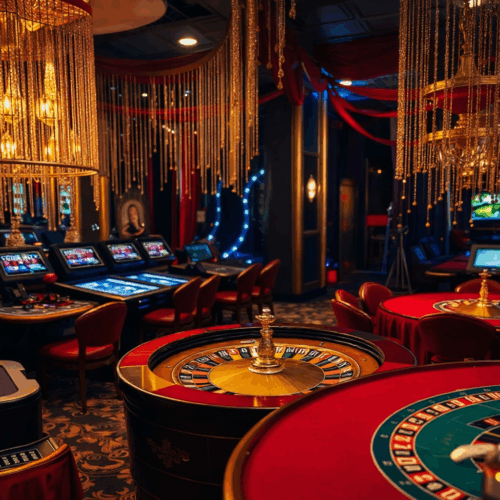
The Russian casino industry wants to shed the sleazy image of its early years and is now focusing on a diversified business model. The legendary gambling oasis of Las Vegas in the US state of Nevada serves as a role model. More than 50% of the revenue generated by casinos there comes from hotels, restaurants, spa centers, and highly popular shows and concerts. Russian gambling zones are also making progress in this area, as figures from the Russian Association of Entertainment Industry and Event Tourism (AIRIS) show. Over the past three years, the share of non-gambling services in total revenue has risen to almost 30%.
Four gambling zones
There are four zones in Russia where gamblers can legally roll the dice: Yantarnaya in the Kaliningrad region, Sibersyaka Moneta in the Altai region, Primorye in distant Vladivostok, and the tourist magnet Krasnaya Polyana (pictured) in the Black Sea region of Krasnodar. The Krasnaya Polyana gambling zone, located in the mountains above Sochi, replaced Azov City in 2017, which was located on the border between the Krasnodar and Rostov regions and ultimately had to make way for the ambitious Krasnaya Polyana project near Sochi, which was built for the Winter Olympics.
According to the Casino Operators Association (AIRIS), the four gambling zones welcomed a total of around 1.74 million guests in 2025, representing an increase of 3.4% over the previous year. By comparison, Las Vegas had 35 million visitors last year. More than half of them tried their luck in the numerous casinos of the dazzling city.
The gambling zone in Krasnaya Polyana attracted the most visitors: 904,000, a slight increase on the previous year. Far behind is the Tigre de Cristal casino in the Primorje gambling zone with 383,000 visitors, an increase of 6.8% on 2024. The Sobranie Casino, translated as "assembly," in the Yantarnaya zone near Kaliningrad welcomed 282,800 guests last year and recorded the highest growth rate among Russian gambling venues at 13%. The Casino Altai Palace in the Siberskaya Moneta zone had the fewest guests: 165,000 (+2.3%).
Gamblers from near and far
According to AIRIS, the proportion of foreign guests varied greatly from casino to casino last year. The proportion of foreigners at the Sobranie casino in the Far East was 20%, in Krasnaya Polyana it was 17% and at the Altai Palace it was 6%. However, casinos are seeing a significant downward trend in this regard. In 2019, the proportion of foreigners in Krasnaya Polyana was still around 25%. Most foreign gamblers come from Belarus, Kazakhstan, Azerbaijan, Uzbekistan, Georgia, Armenia, Iran, the United Arab Emirates, and China.
The Primorye gambling zone generated a net profit of 2.1 billion rubles, equivalent to 23.1 million euros, in 2024, with a turnover of 4.9 billion rubles, 54 million euros, which represented an increase of 22.5% compared to 2023. Casino Sobranie recorded a net profit of 74 million rubles (815,716 euros) and revenue of 9.38 billion rubles (103.4 million euros) in the same year, an increase of 13% over the previous year. No current figures are available for the financial results of Krasnaya Polyana and Sibirskaya Monetea.
The gap between Russian casinos and their international competitors is clearly illustrated by the example of the Chinese special economic zone of Macau, the world's largest gambling metropolis. Its annual gross revenue in 2025 amounted to US$30.8 billion, an increase of 9% compared to the previous year, according to figures from the industry portal SBC Eurasia.
Potential tax jackpot
Tax revenues from the four Russian casino sites amounted to 2.6 billion rubles, or 28.6 million euros, last year – Krasnaya Polyana alone contributed 1.56 billion rubles, or approximately 17.2 million euros. This figure is roughly on par with the previous year's result and is a far cry from the industry's former tax revenues. In 2005, the auditing firm PricewaterhouseCoopers (PWC) estimated the market volume of the Russian gambling industry at $6 billion. In 2006, tax revenues amounted to 31.1 billion rubles, or 342.8 million euros. In 2010, the first year after the reform to establish four gambling zones came into force, only 65.8 million rubles, or 725,326 euros, flowed into the state coffers.
Last week, the Russian Ministry of Finance's proposal to legalize online casinos in Russia made headlines. Online casinos would then be subject to taxes amounting to 30% of their revenues. The proposed initiative could bring the Russian state budget annual revenues of around 100 billion rubles, equivalent to 1.1 billion euros. According to the business newspaper Kommersant, the turnover of illegal internet casinos is enormous: the estimated value is 3 trillion rubles, or 33 billion euros. This far exceeds the volume of the legal betting market, which stands at 1.7 trillion rubles, or approximately 18.9 billion euros.
Casino reform failed?
The impetus for casino reform came from the flourishing gambling business in Russia, which had spread to apartment blocks in numerous Russian cities since the 1990s in the wake of market democratization. Slot machines were not uncommon in conventional residential buildings and supermarkets, as market participants at the time report. It was during this period that the ironic term "Odnorukij Bandit," or one-armed bandit, was coined for slot machines, reflecting the unease about the dubious practices of the industry. During his first term as president, Vladimir Putin equated gambling with the "alcoholization of the population." The Russian head of state wanted to curb the lucrative gambling business, and in 2006, the government finally got serious with a bill to create gambling zones. The law came into force on July 1, 2009.
However, critics consider the reform to have failed in some respects. According to economic expert Nikolai Oganesov from the Russian Chamber of Commerce and Industry (TPP RF), the reorientation was intended to serve the development of remote and structurally weak Russian regions. However, practice has shown that the casino business depends on convenient transport links and a constant flow of tourists, and should also be located near major cities, the expert continues. Oganesov admits that none of the four gaming zones met these requirements from the outset.
Following the restrictions on the gambling business in Russia, many casino operators have gone underground into the shadow economy, according to industry representatives. Their conclusion: online casinos and illegal gambling establishments are now much more profitable than before the reform, as operators do not pay taxes and are hugely popular in the internet age.
This article first appeared in the exclusive newsletter of the German-Russian Chamber of Commerce.
This article first appeared in the exclusive newsletter of the German-Russian Chamber of Commerce.