Turkey
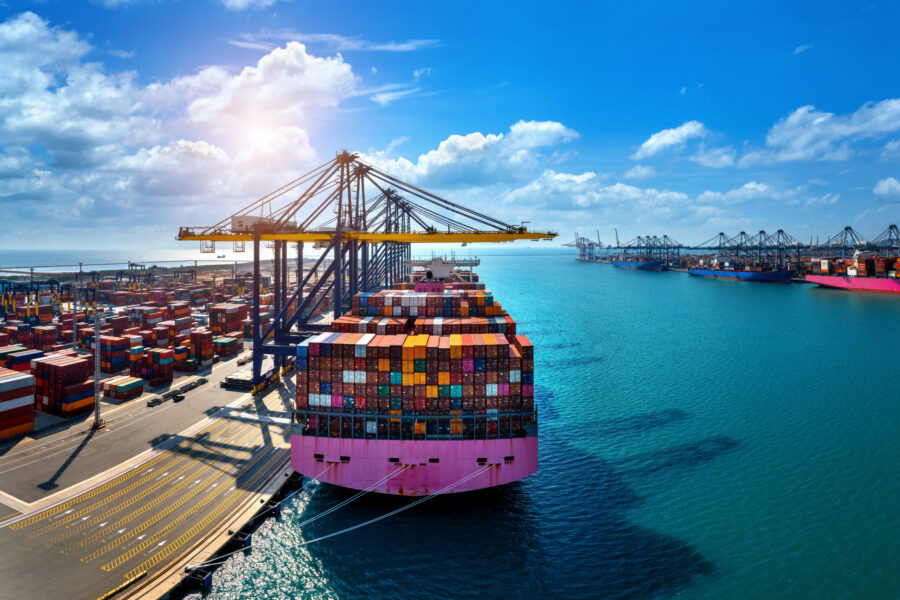
The central corridor takes center stage again
The Middle Corridor, which runs through Central Asia and the Caucasus, is once again gaining in importance. While the routes in the north are burdened by the sanctions against Russia and southern connections are becoming less secure due to the tense situation in the Middle East, this axis is once again coming into focus as a central land connection between Europe and Asia.
Turkey is attempting to transform a border crossing with Armenia, which has been closed for decades, into a strategic gateway for trade between the two continents. Ankara wants to position itself as a reliable logistics location in a phase of growing disruption to traditional transport routes.
Turkish authorities have already begun installing passport control systems at the Alican border crossing, which has been closed for 32 years. They hope to be able to reopen the crossing soon. This would also pave the way for a new road and rail corridor through the Caucasus. There is no specific date yet, but the Turkish side is signaling that it expects the opening to take place soon.
The economic background is considerable. Trade between Europe and Asia amounts to around three trillion US dollars a year, of which around 90 percent is currently handled by sea. The fastest connection by water takes around 40 days.
The Middle Corridor could significantly shorten this time. According to industry representatives, the route connecting China with Europe via the Caucasus and Turkey could reduce the transportation time to just 12 to 15 days.
Two projects at the center of Turkey's strategy
Two major projects are currently at the center of Turkish planning. The first is the so-called Development Road, a planned road and rail network that will connect the Gulf with Europe via Iraq and Turkey. The second is the TRIPP project, a US-backed link between Turkey and Azerbaijan via Armenian territory.
The development route would have the advantage of bypassing both the Strait of Hormuz and the Suez Canal. However, the project is still at an early planning stage. It would require billions in investment and would pass through areas of Iraq that remain infrastructurally and politically challenging.
TRIPP, on the other hand, appears more advanced. The project was presented at the White House in February together with a provisional peace agreement between Armenia and Azerbaijan. It is also intended to help further defuse the decades-long conflict between the two countries. Turkey has announced that it will open its border with Armenia as soon as a final peace agreement has been signed.
According to information from Azerbaijan, construction work is already underway on the Azerbaijani side, in which Turkish companies are also involved. At the same time, Turkey is pressing ahead with the expansion of its own rail infrastructure.
If the Middle Corridor actually becomes fully operational, experts predict that freight volumes could increase significantly. Transported volumes have already tripled between 2021 and 2025. In the long term, capacity could grow from around 5 million tons at present to up to 20 million tons per year. However, several bottlenecks are still slowing down development: slow ferry connections across the Caspian Sea, different track gauges and complex customs procedures.
JPMorgan therefore recently described the Middle Corridor as a route "that everyone needs, but only a few use".
Central Asia's raw materials are moving closer to the world markets
With better connections via the Middle Corridor, Central Asia's raw material exports could also become more important. At a time when supply chains are being diversified and alternative sources of supply are being sought, interest in the region's resources is growing.
A freely accessible dataset from the Oxus Society puts the raw material exports of the five Central Asian republics at more than 118 billion US dollars. It provides a rare quantitative insight into the region's role in Eurasian supply chains.
It covers the reserves, production, processing and export destinations of more than 100 commodities, including minerals, hydrocarbons, industrial materials, chemicals and agricultural products in Kazakhstan, Kyrgyzstan, Tajikistan, Turkmenistan and Uzbekistan.
The data shows above all the dominant position of Kazakhstan. Kazakh oil alone accounts for 40 percent of all exports recorded in the data set, making it the largest single commodity item. Turkmen gas is in second place with 9.2 percent, followed by Uzbek gold with 8.3 percent, Kazakh gold with 7.7 percent and Kyrgyz gold with 5.3 percent.
Overall, hydrocarbons account for just over half of all recorded exports. Their value is estimated at around 61 billion US dollars per year. Critical minerals account for a further 15.7 billion US dollars, of which Kazakhstan accounts for around 14 billion.
Kazakh copper and uranium play a particularly prominent role among these critical raw materials. According to the data set, copper exports reach around 7.3 billion US dollars annually, uranium exports 4.2 billion.
The direction of trade is more diverse than often assumed
The distribution of export destinations also shows a more differentiated picture than is often assumed. The European Union is the largest customer bloc, accounting for 29.1% of total recorded exports. Although China is the largest single importer, it accounts for around a quarter of total exports.
The United Kingdom and Switzerland each account for around 10% of imports, with precious metals trading playing a particularly important role here. Russia directly accounts for only 1.2% of the exports recorded in the data set - significantly less than the EU, China or important Western trading centers.
The picture is different for critical minerals. Here, China accounts for almost half of Central Asia's exports and Russia for around a quarter. The European Union accounts for 6.4 percent and the United States for 2.1 percent.
It is precisely this distribution that explains why Western interest in Central Asia has increased in recent years. It is not just about transit routes, but also about access to strategically important raw materials.
Tajikistan is a particularly striking example. According to the Oxus Society, the country accounts for around 20 percent of global antimony production. Antimony is important for the defense industry, electronics and other industrial applications. Tajikistan exports this raw material primarily to France and Belgium, with another portion going to Turkey.
According to the data set, the country also has 12 percent of the world's antimony reserves, 11.2 percent of manganese reserves and 7.6 percent of lead reserves. Despite this, Tajikistan remains the smallest exporter of raw materials in the region, with exports worth just 1.16 billion US dollars.
The Middle Corridor is therefore much more than a logistical project. It stands for a possible reorganization of trade routes between Europe and Asia - and at the same time for the attempt to integrate Central Asia more closely into global supply and raw material chains.
The post The Middle Corridor takes center stage again appeared first on ostwirtschaft.de.
Original article (German):
Read on ostwirtschaft.de →