Economic Trends in Post-Soviet Countries

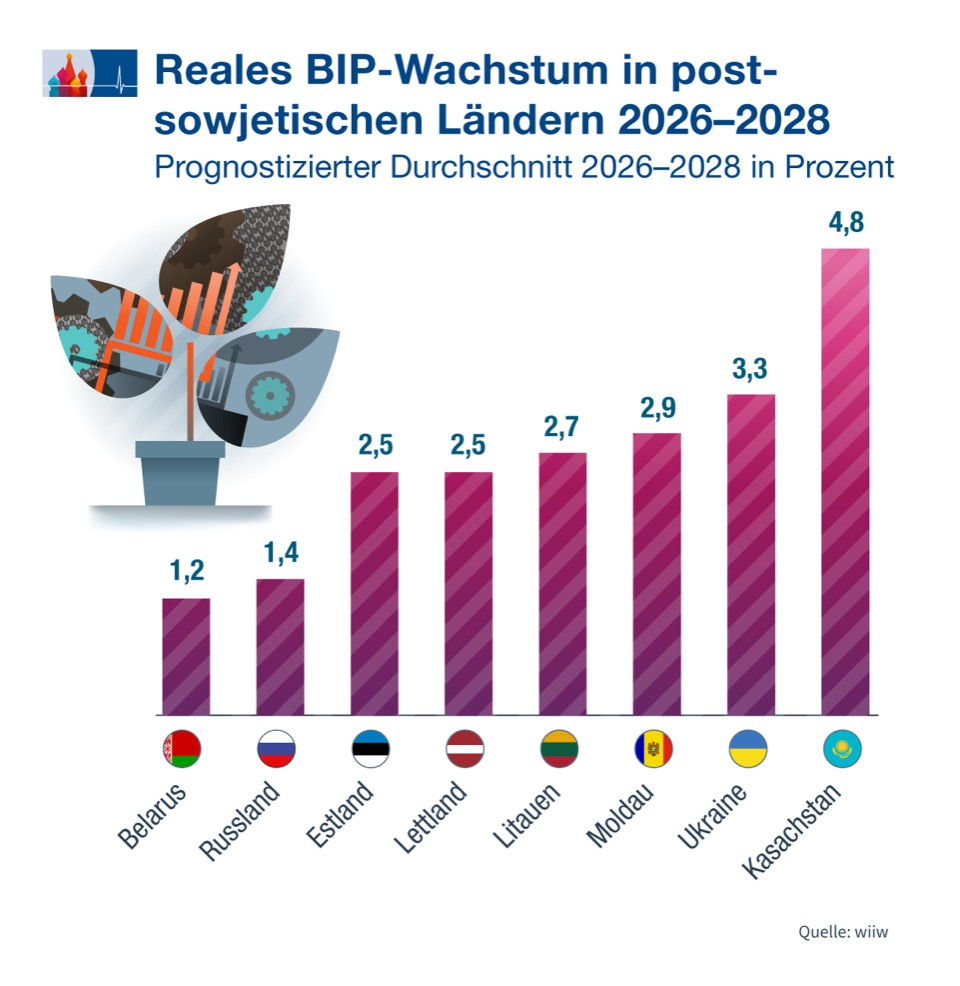
For the countries of Central, Eastern, and Southeastern Europe, the Vienna Institute for International Economic Studies (WIIW) forecasts average annual growth of 2.6% for the years 2026 to 2028. At the same time, the institute forecasts that growth will slow in many countries in the coming years. This is also due to increasingly strict fiscal policies in many places, aimed at keeping the currency stable. In addition, companies in many countries will need to invest in automation, digitalization, and the integration of artificial intelligence into production. However, this will not have an immediate impact on growth.
No More Peace Dividend
Furthermore, with the ongoing military conflict in Ukraine, the “peace dividend” in the Central and Eastern European region has been exhausted. Even an end to the conflict would not automatically lead to an economic boom. While “credible security guarantees” could create the conditions for investment in the country, it is not certain that this will happen. Conversely, a “fragile peace” carries the risk of only a slow recovery for Ukraine, which increases risks and makes the country less attractive for investment from Central and Eastern Europe.
Regardless of the Ukraine crisis, the trade dispute between the EU and the U.S. poses significant risks to growth and stability for the entire Eastern European and post-Soviet region. While most countries in Central, Eastern, and Southeastern Europe, especially those within the EU such as Poland, are showing solid growth, the outlook for some post-Soviet countries outside the EU is mixed.
Belarus in a Downward Spiral
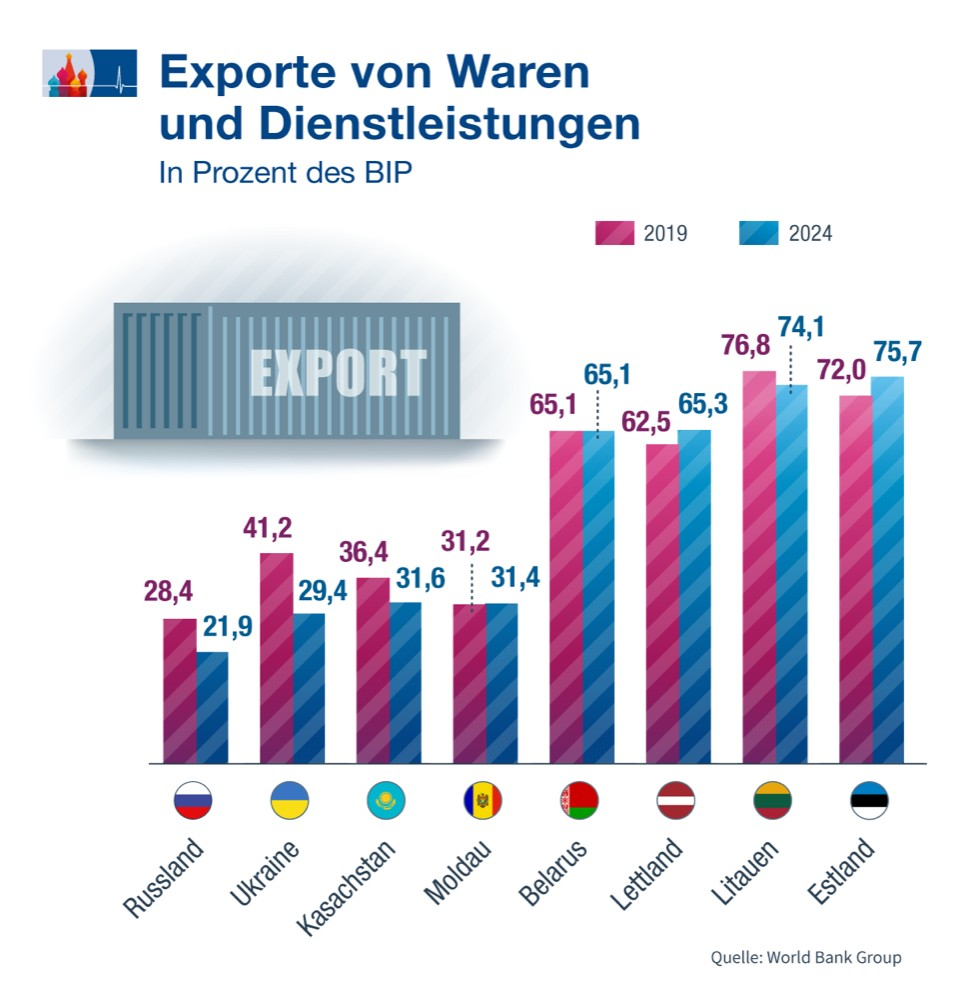
Belarus experienced a significant slump in economic growth in 2025, which shrank from 4.3% in the previous year to 1.3%. The main reason for this was declining exports. The Republic of Belarus’s export volume shrank by 10% in 2025. Two-thirds of this decline can be attributed to falling exports to Russia, and one-third to declines in exports to other countries. However, domestic growth also declined, with transportation and construction serving as the main drivers of growth. Production, however, declined because, unlike in 2023–24, orders from Russia fell by about 2%.
The Belarusian government is projecting 2.8% growth for 2026, which is significantly below the 4.1% growth rate targeted for 2025. The government in Minsk continues to rely on rising exports, which are expected to have a positive impact on average wages and purchasing power.
The Vienna Institute expects Belarus’s growth slowdown to continue, with growth of about 1.3% in 2026/27 and just 1.1% in 2028. The Vienna-based researchers assume that Russia’s weak growth will inevitably have a negative impact on Belarus’s growth rates. The fragile financial situation of many Belarusian companies will limit their ability to invest. The deterioration of conditions in external markets could prompt Belarus to adopt a more restrictive monetary policy to curb inflation.
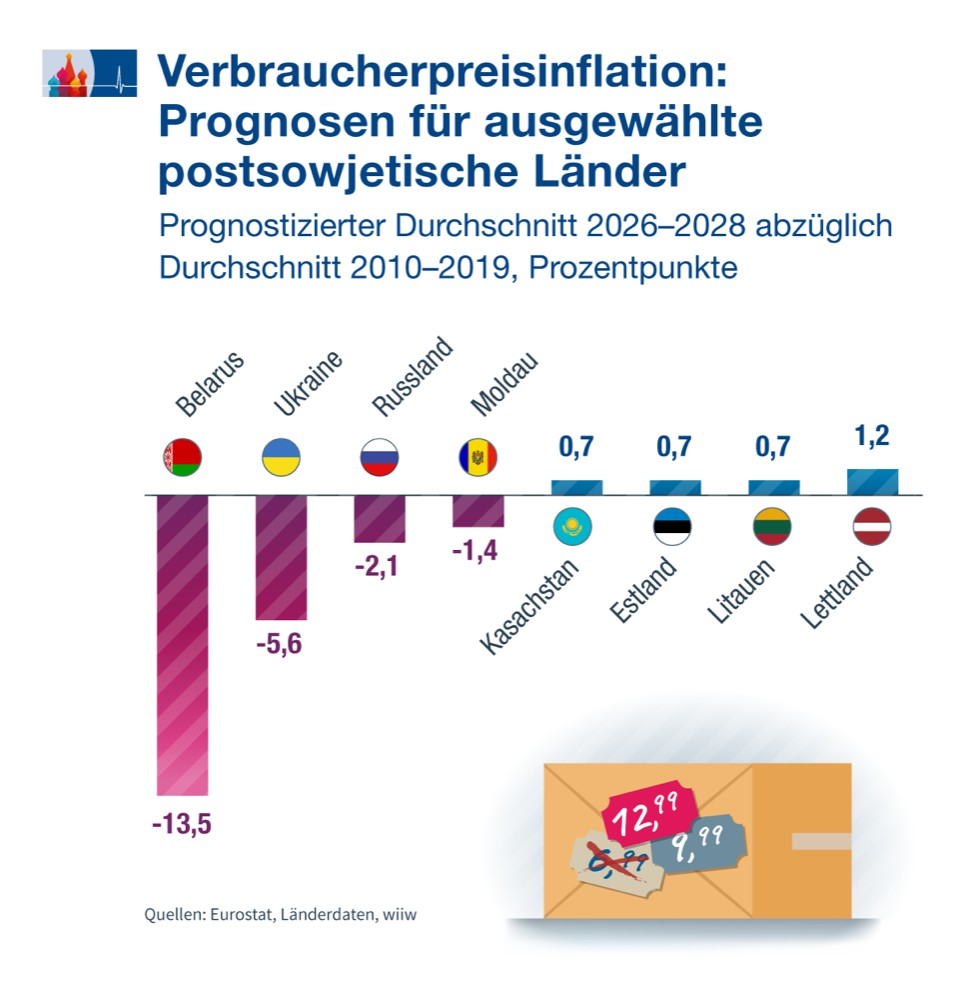
A potential easing of U.S. sanctions remains a source of uncertainty, while an easing of European sanctions against Belarus is hardly expected. Officially, the inflation forecast stands at 7% for this year, and is expected to drop to 5.8% in 2027–2028. According to the WIIW, the Belarusian ruble will most likely track the stability of the Russian ruble, whose exchange rate is expected to decline only slightly.
Kazakhstan Seeks New Paths to Growth
Following record growth of 6.5% in 2025, growth is expected to slow to 4.5% this year. The expansion of oil production at the Tengiz oil field has peaked, and the expected decline in oil prices will reduce export revenues and budget revenues. The Ukrainian drone attack on the Russian oil terminal in December led to a significant drop in oil production in January.
Furthermore, previous drone attacks on international tankers transporting Kazakh oil have fueled fears of further disruptions and losses. The problems in the oil sector contribute to the expectation that overall investment in Kazakhstan will be low this year. However, according to the institute, investment in construction, transportation, and manufacturing will grow, partly due to infrastructure modernization.
In the services and manufacturing sectors, sentiment improved in January. Credit-driven growth in private consumption is likely to level off in 2026 due to high interest rates, the researchers say. Inflation has fallen only slightly over the past three months, standing at 12.5% in December.
The Kazakh government’s long-term strategy is to move away from raw material extraction and attract foreign direct investment from the EU, the U.S., China, and Russia, particularly for the manufacturing sector. However, the disruptions at oil terminals described above and the new sanctions against some Russian oil companies that also operate in Kazakhstan point to growing external risks.
According to the Vienna-based researchers, the national currency, the tenge, is likely to weaken in 2026, partly due to the decline in oil prices. This assessment was made prior to the outbreak of the Iran war.
Baltic Republics on a Growth Trajectory
According to the Vienna Institute’s assessment, the three post-Soviet Baltic republics—Estonia, Latvia, and Lithuania—are expected to experience significantly stronger growth than Russia and Ukraine. Two factors play a key role here: integration into the EU market and access to EU funding for infrastructure modernization. Estonia has the most favorable outlook of all the Baltic republics. According to the Vienna-based researchers, the smallest country in the Baltic region, with a population of just under 1.4 million, is poised for a phase of rising growth following a prolonged recession and stagnation. While Estonian economic growth was estimated at 1.4% in 2025, a rate of 2.3% is expected for this year and nearly double that—2.7%—in 2027 compared to 2025.
Nevertheless, growth remains significantly below pre-February 2022 levels. Negative factors include a lack of business confidence and ongoing restrictions on competition. Estonia’s economic recovery is expected primarily due to an improvement in exports. Production, on the other hand, is growing more slowly, partly due to high labor costs. Inflation could remain a persistent problem. Geopolitical tensions, particularly with neighboring Russia, could also have a negative impact. Added to this are risks stemming from U.S. tariff policies. Both factors could slow export growth and lead to postponed investments.
Estonian military spending remains exceptionally high at more than 5% of gross domestic product.
Lithuania also has growth prospects as favorable as Estonia’s. Growth there is expected to reach 2.5% this year. Both household consumption and investment are on the rise. Real incomes are increasing. Investment growth is driven primarily by public investment. However, strong export growth has slowed toward the end of 2025. The new coalition government led by the Social Democrats, however, faces the challenge of how to finance the significantly increased defense costs, which amount to more than 5% of gross domestic product.
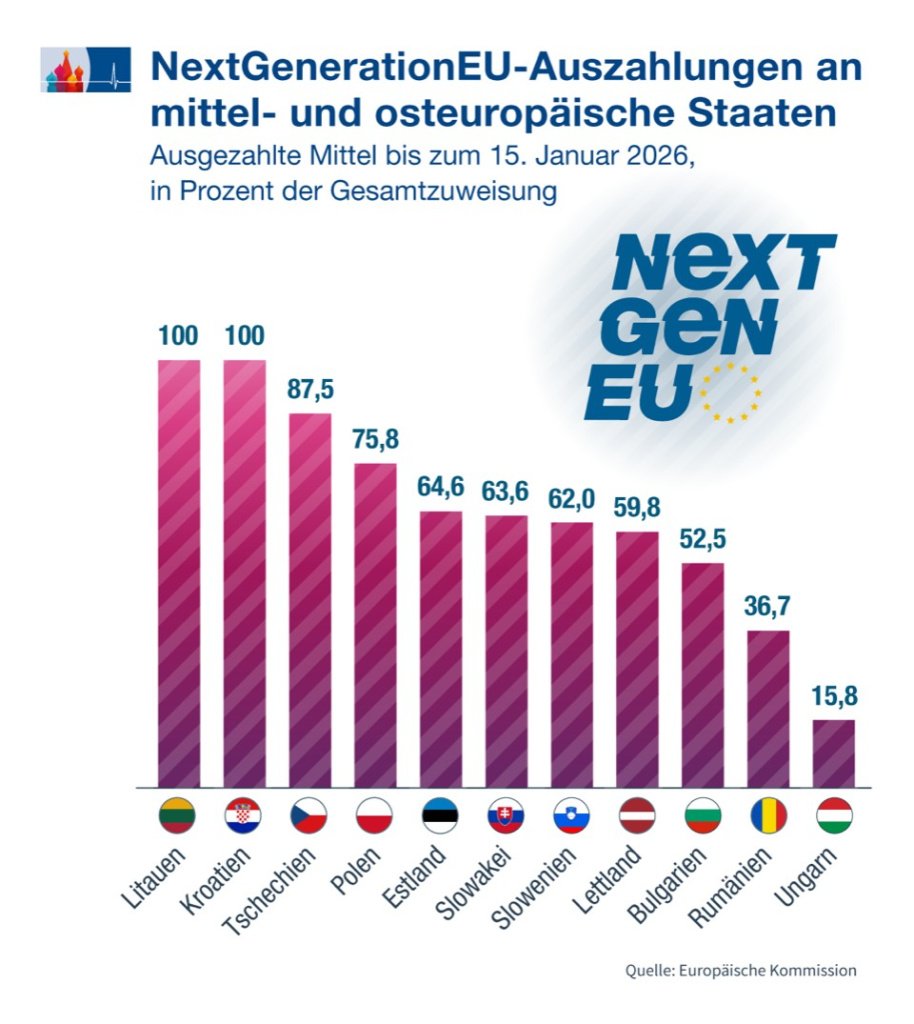
According to the Vienna-based researchers, Latvia can hope for rapid growth. Following a period of recession and stagnation in the years 2023–2034, the institute expects stable growth rates of 2.5% for the coming years. In 2026, growth will be driven primarily by private household consumption and investment. Real incomes in Latvia are expected to rise this year, according to WIIW estimates. Following a strong upturn, driven primarily by the European Union’s NextGeneration program, the institute estimates that investment will decline this year and next. An increase in the volume of credit in the business sector and among households will boost private investment and housing construction, according to the institute. At the same time, however, Latvian export growth will remain weak.
The ruling coalition of center-right and center-left parties must manage the growing economic costs of decoupling from Russia, particularly in the energy sector. Added to this is the strain on the budget from additional defense spending.
Moldova – Land of Volatile Growth
The former Soviet republic of Moldova, once considered the fruit and vegetable garden of the Soviet Union, is experiencing increasing growth. Gross domestic product grew by 5.2% in the third quarter of 2025, resulting in an average of around 2% for the first three quarters. Agriculture grew by 15% in the third quarter, while the construction sector expanded by 8.3%. Good weather led to an excellent harvest, which boosted food production and exports. Foreign capital inflows, including both aid and loans, fueled investment.
The country has become independent of Russian gas imports. Stronger growth is expected in 2026. Investments will increase, financed by cheap loans and aid funds, including 1.9 billion from the EU’s Reform and Growth Fund. However, the development of agriculture as the central pillar of the economy depends to a large extent on the weather. This gives rise to incalculable risks.
The Vienna-based researchers assess the stability of the national currency, the leu, as relatively stable. Strong inflows of foreign currency, primarily from the Moldovan diaspora, contribute to this stability, which has an anti-inflationary effect.
The WIIW considers Moldova’s political leadership’s goal of EU membership by 2030 to be “overly ambitious.” The WIIW assesses that Moldova’s upcoming association negotiations with the EU will be “difficult,” particularly in the areas of agriculture and legal reform.
This article first appeared in the exclusive newsletter of the German-Russian Chamber of Foreign Trade